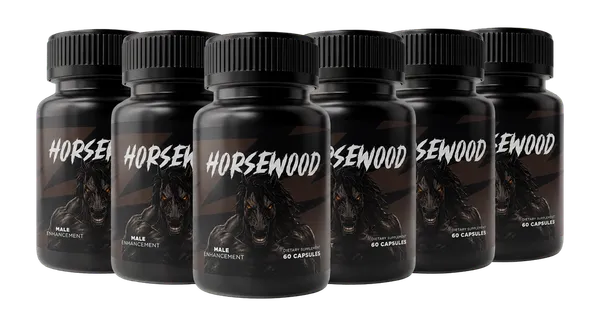
Independent supplement label analysis ยท We earn affiliate commission ยท Updated July 31, 2026
See the full breakdown โ†’
Label analysis ยท How to read a Supplement Facts panel

The "Equivalent To" Trick: How a Supplement Label Turns 10 mg Into 1,000 mg

Four words on a Supplement Facts panel can multiply a dose by a hundred without anyone technically lying. Once you know where to look, you'll never read a supplement ad the same way again.

Here is a men's supplement, advertised with a number in enormous type: 1,000 mg of Tongkat Ali. Is that a good dose?

It's a fair question, and the honest answer takes about ninety seconds to find. We pulled the product's own label off its own website, zoomed in on the Supplement Facts panel, and read the line.

It said 10 mg.

Not a typo. Not a different product. The same bottle, the same brand. The full line reads:

What the panel actually says

"Tongkat Ali (Eurycoma Longifolia) โ€” 10 mg
(From 100:1 extract, equivalent to approximately 1000 mg of dry Tongkat Ali powder)"

There it is, in parentheses, in small type, on the back of the bottle: equivalent to. Two words doing an enormous amount of work.

A Supplement Facts panel. The Tongkat Ali line reads 10 mg, from a 100:1 extract, equivalent to approximately 1000 mg of dry Tongkat Ali powder. Horny Goat Weed reads 8 mg from a 10:1 extract, equivalent to approximately 80 mg of powder.
The panel in question. Sixth line down. The advertised figure and the actual figure are both here โ€” a hundredfold apart.

How the arithmetic works

An extract ratio like 100:1 means one hundred units of raw plant were processed down into one unit of concentrated extract. So if you put 10 mg of a 100:1 extract into a capsule, you can accurately say that extract was derived from 1,000 mg of root.

That statement is true. It is also close to meaningless, and here's why.

10 mg of extract โ†’ advertised as "1,000 mg"
The ratio describes a manufacturing process. It says nothing about what survived it.

Extraction is not a neutral act of concentration. You can produce a "100:1 extract" by stripping away 99% of a plant's mass and capturing almost none of the compounds that made anyone study the plant in the first place. The ratio tells you how much material went in. It tells you nothing about what came out.

That's why serious supplement research doesn't use ratios. It uses standardization โ€” a stated percentage of a specific marker compound. For Tongkat Ali, that marker is eurycomanone, and the published human trials use extracts standardized to roughly 0.8โ€“1.5% of it.

On the label above, there is no standardization percentage anywhere. Which means nobody โ€” not you, not me, not the retailer โ€” can say how much of the active compound is actually in that capsule.

The comparison that should be on every sales page

Here's the part that makes the "1,000 mg" headline collapse entirely. The clinical trials people cite for this ingredient didn't use raw powder at all. They used standardized extract, at around 200 mg per day.

The productPublished human trials
What's in the capsule10 mg of extract200 mg of extract
Standardized?not declared0.8โ€“1.5% eurycomanone
Active compound deliveredunknownroughly 1.6โ€“3 mg/day

Ten milligrams against two hundred. The product delivers about 5% of the extract dose used in the research โ€” while advertising a number five times larger than the trial dose.

That's the whole trick. Compare extract to raw herb, and a small dose looks enormous.

Four phrases to look for on any label

You don't need to know chemistry to catch this. You need to know four phrases. Here's what I check on every panel, in about thirty seconds:

  • 1. "Equivalent to" / "from X:1 extract" The advertised number is raw-herb equivalence, not capsule content. Find the small number before the parenthesis โ€” that's the real one.
  • 2. "Proprietary blend" A legal loophole. The company gives you one total for several ingredients and never tells you the split. Usually it means the expensive ingredient is a rounding error.
  • 3. No standardization percentage If a label doesn't state the marker compound and its percentage, the extract ratio is unverifiable. Good manufacturers state it, because it costs them money to hit it.
  • 4. The wrong part of the plant Nettle root and nettle leaf have different research behind them. So do berry, bark and rhizome preparations. Labels rarely make this obvious, and it changes everything.
The 30-second habit

Before you buy any supplement: find the Supplement Facts image on the seller's own site, zoom in, and read the smallest type on the panel. If the ad number and the panel number don't match, the panel is the truth. Every time.

Is a low dose automatically bad?

No โ€” and I want to be fair here, because it's easy to turn this into outrage and outrage isn't accurate.

A low dose means a low chance of doing much. It also means a low chance of causing harm. Plenty of people take gentle botanical blends, feel fine, and are happy with them. If a product is honest about what it is, priced accordingly, and sold with a real guarantee, there's nothing wrong with buying it.

The problem isn't 10 mg. The problem is 10 mg advertised as 1,000 mg โ€” because that's what makes someone pay a premium expecting a clinical effect they were never going to get, and then feel cheated when nothing happens.

You deserve to make that call with the real number in front of you. That's the entire point of this site.

Affiliate disclosure โ€” before you click anything Some links on this site earn us a commission if you go on to buy, at no additional cost to you. It doesn't change what we write. The product whose label appears above scored 3.4 out of 5 in our own review, with an entire section explaining why its headline claim is misleading. We'd rather keep your trust than a sale.

Men's Health Defense Editorial Team

Supplement label analysis

We review men's supplements by reading what the manufacturer actually publishes โ€” the Supplement Facts panel on the bottle, and the seller's own pricing, shipping, guarantee and returns pages โ€” rather than working from the sales copy. Where something can't be verified, we say so instead of guessing.

Note on credentials: we are not doctors, pharmacists or nutritionists, and nothing here is medical advice. We read labels and compare them to published research โ€” that is the entire scope of our expertise. Decisions about your health, especially if you take medication or manage a diagnosed condition, belong with a qualified professional who knows your history.

Last updated: July 31, 2026

See the full label breakdown โ†’